Launch offer — valid today only

📄 Digital book in PDF · read it on your phone or print it

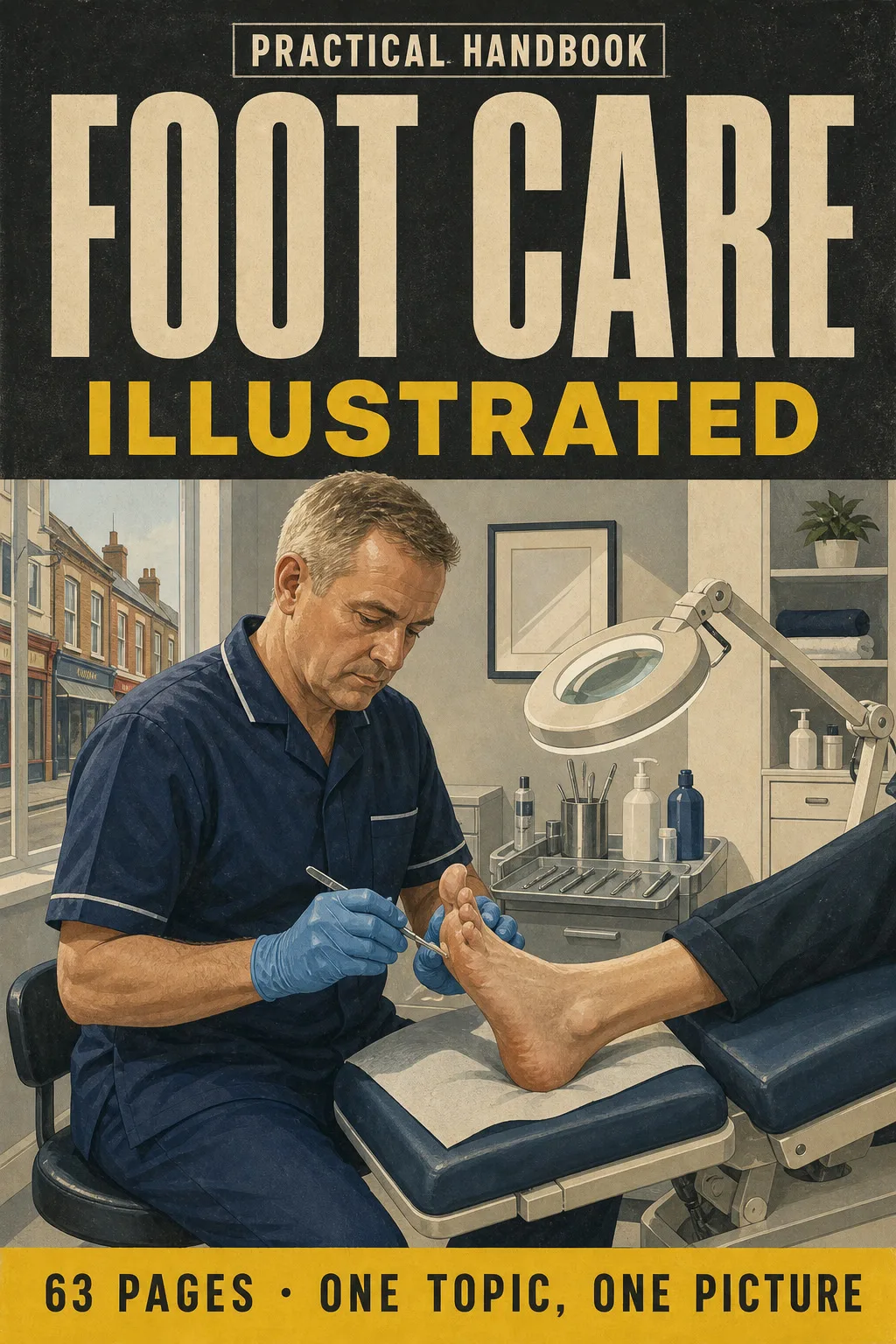
Foot Care, Illustrated: Every Treatment in 10 Steps, Always in the Same Order One Topic on Every Page

Foot anatomy, hand hygiene, instrument sterilisation, the 10-step treatment, nail cutting, corns and calluses, verrucas and the at-risk diabetic foot. Every topic has its own page: the drawing first, then what you need to remember. 63 illustrated pages.

START STUDYING THIS WAY

🔒 Secure checkout · PDF by email · 30-day guarantee
Every topic, its own pageEach technique drawn, with the explanation right beside it
63 illustrated pages7 parts, from the 26 bones of the foot to the practical assessment
Up-to-date sourcesNICE NG19, the NHS England infection control manual (NIPCM) and HTM 07-01
PDF by emailFormat

Look Inside the Book

Every page has one large drawing and a box with the steps and numbers you need to know:

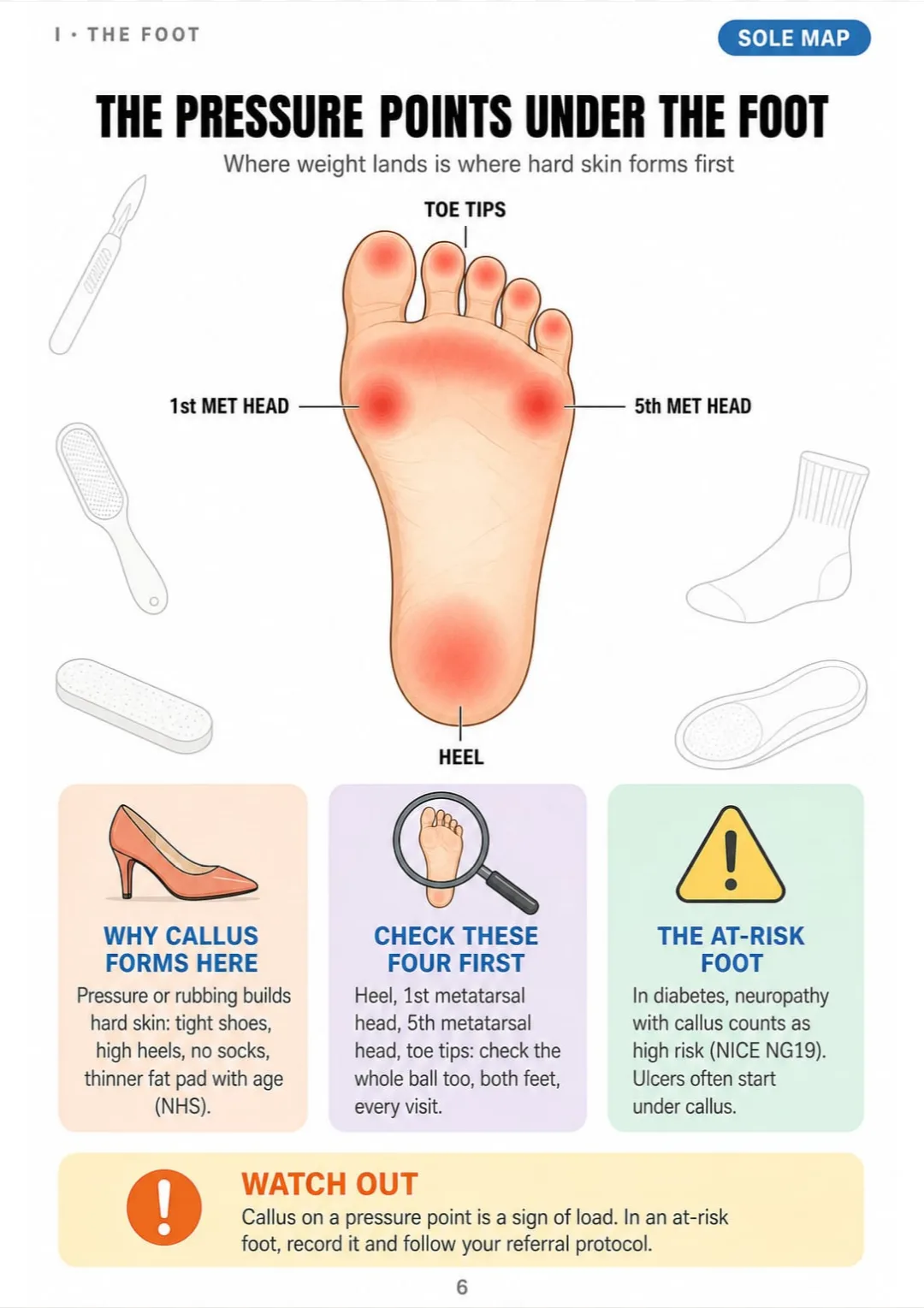
Heel, 1st and 5th metatarsal heads, toe tips: the four pressure points to check every time.
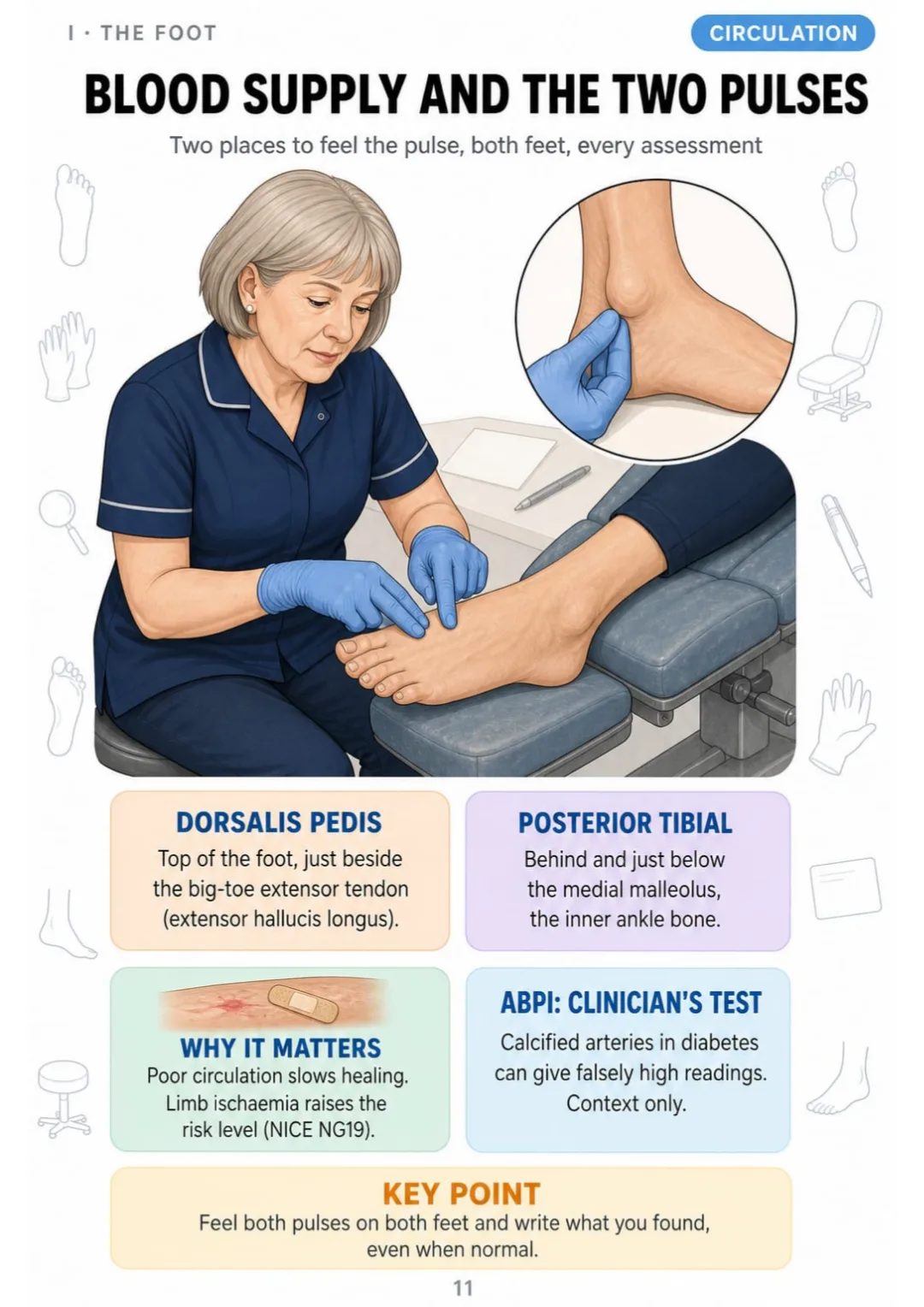
Dorsalis pedis on top, posterior tibial behind the inner ankle: the two foot pulses.
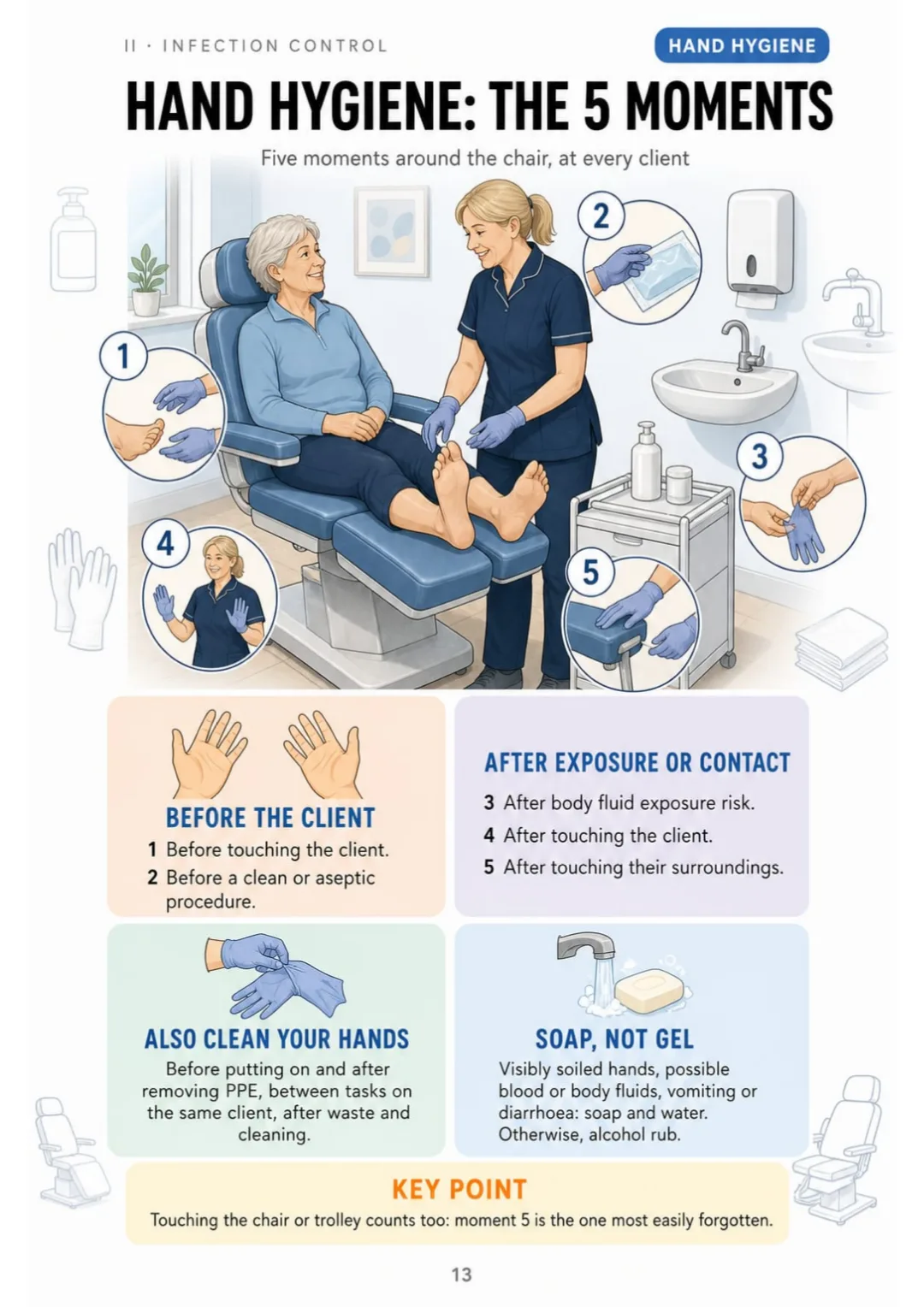
WHO 5 moments, drawn around the treatment chair (NIPCM, Chapter 1)
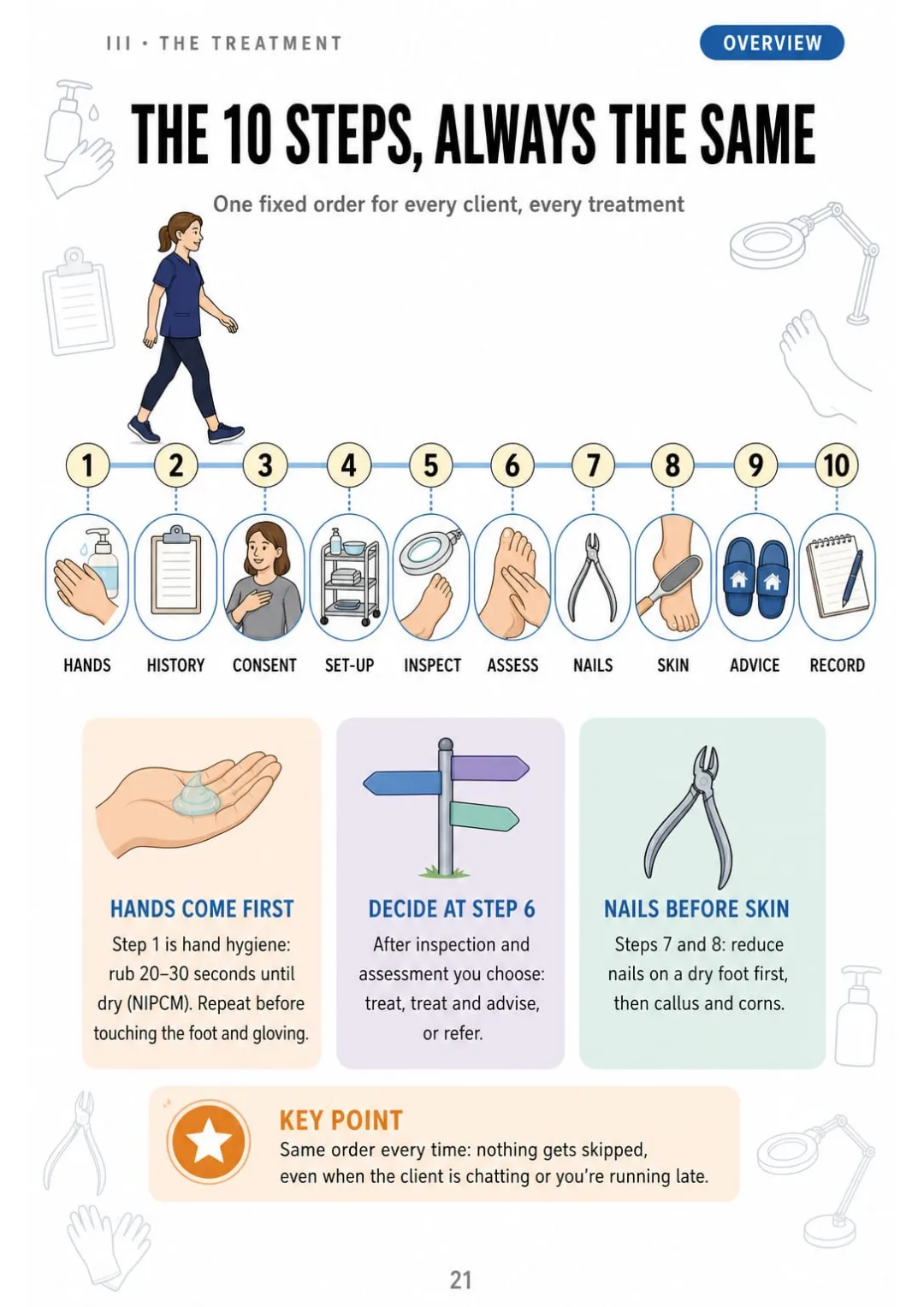
Hands, history, consent, set-up, inspect, assess, nails, skin, advice, record: one line.
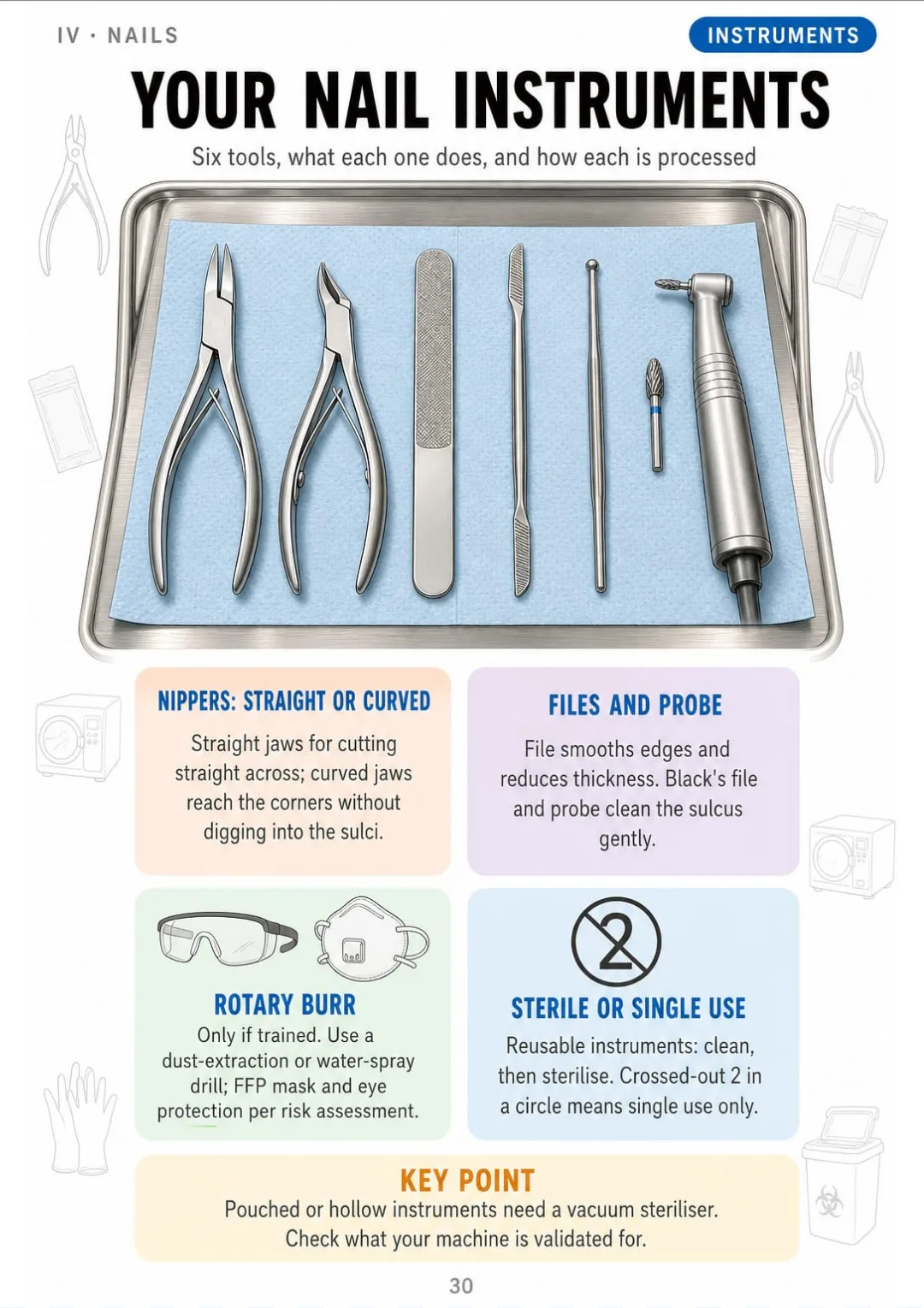
Nippers, files, Black's file, probe and burr: one row, one job each.
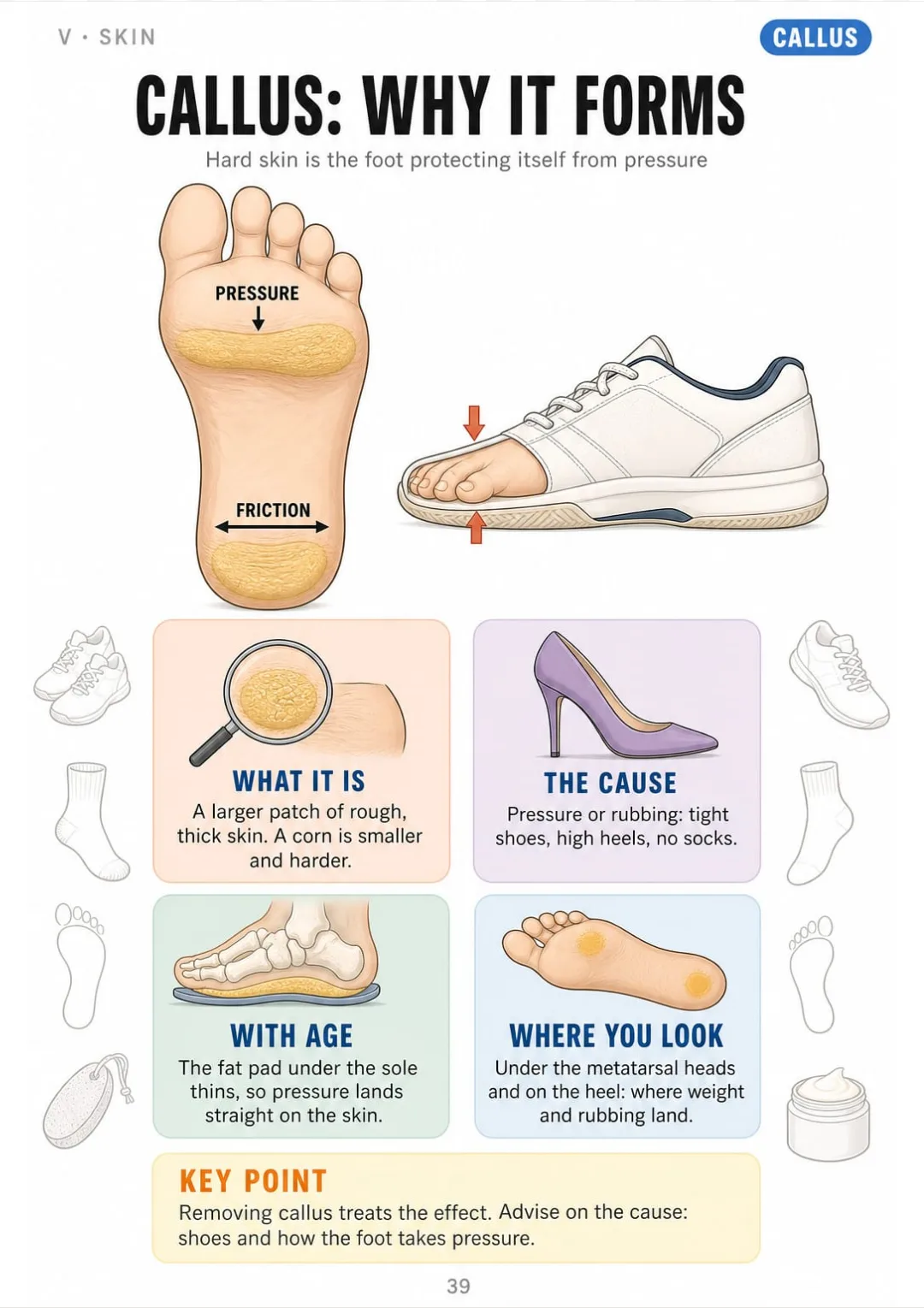
Callus forms from pressure or rubbing: tight shoes, high heels, no socks, a thinner fat pad.
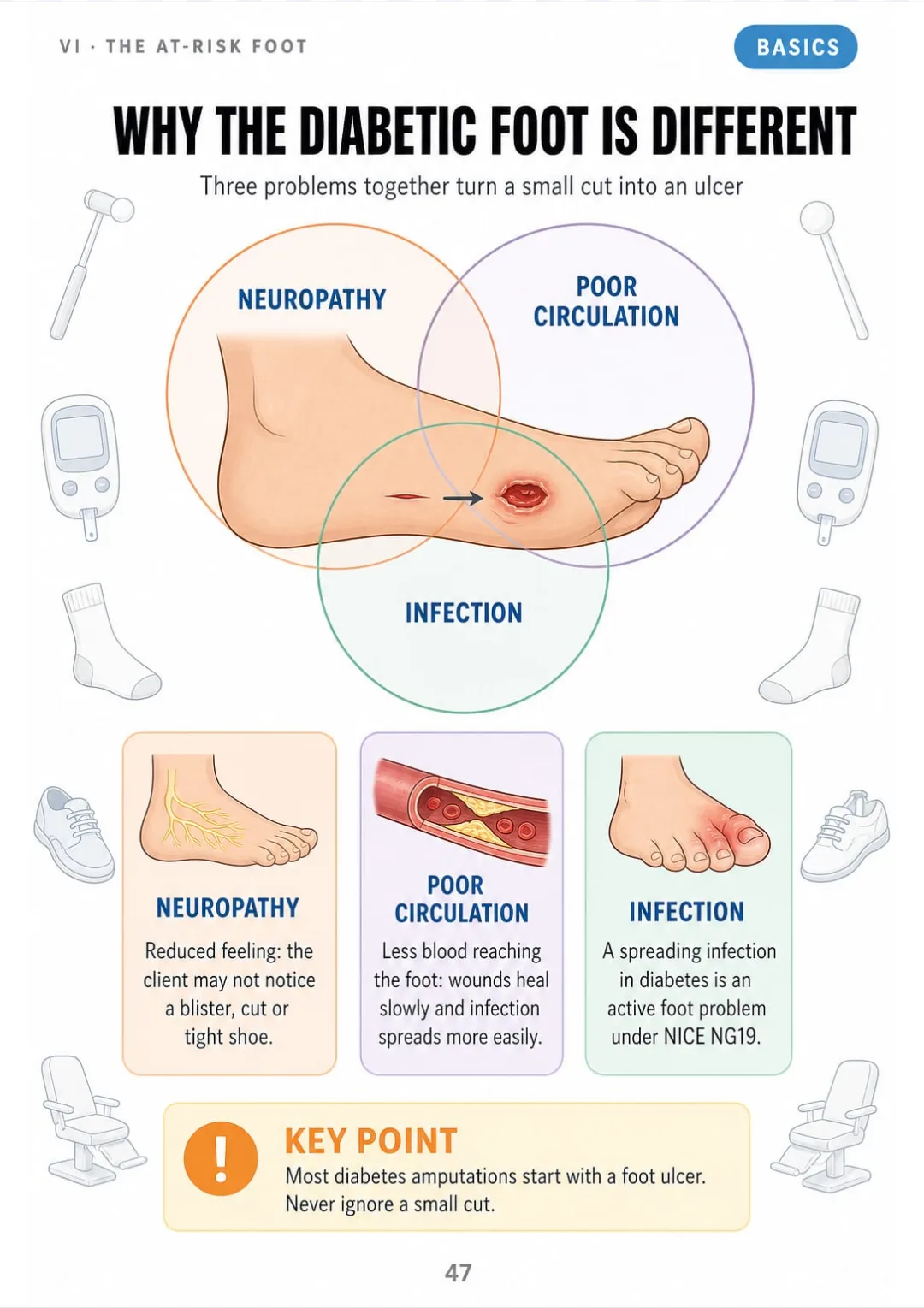
Neuropathy + poor circulation + infection: the three problems of the diabetic foot, drawn together.
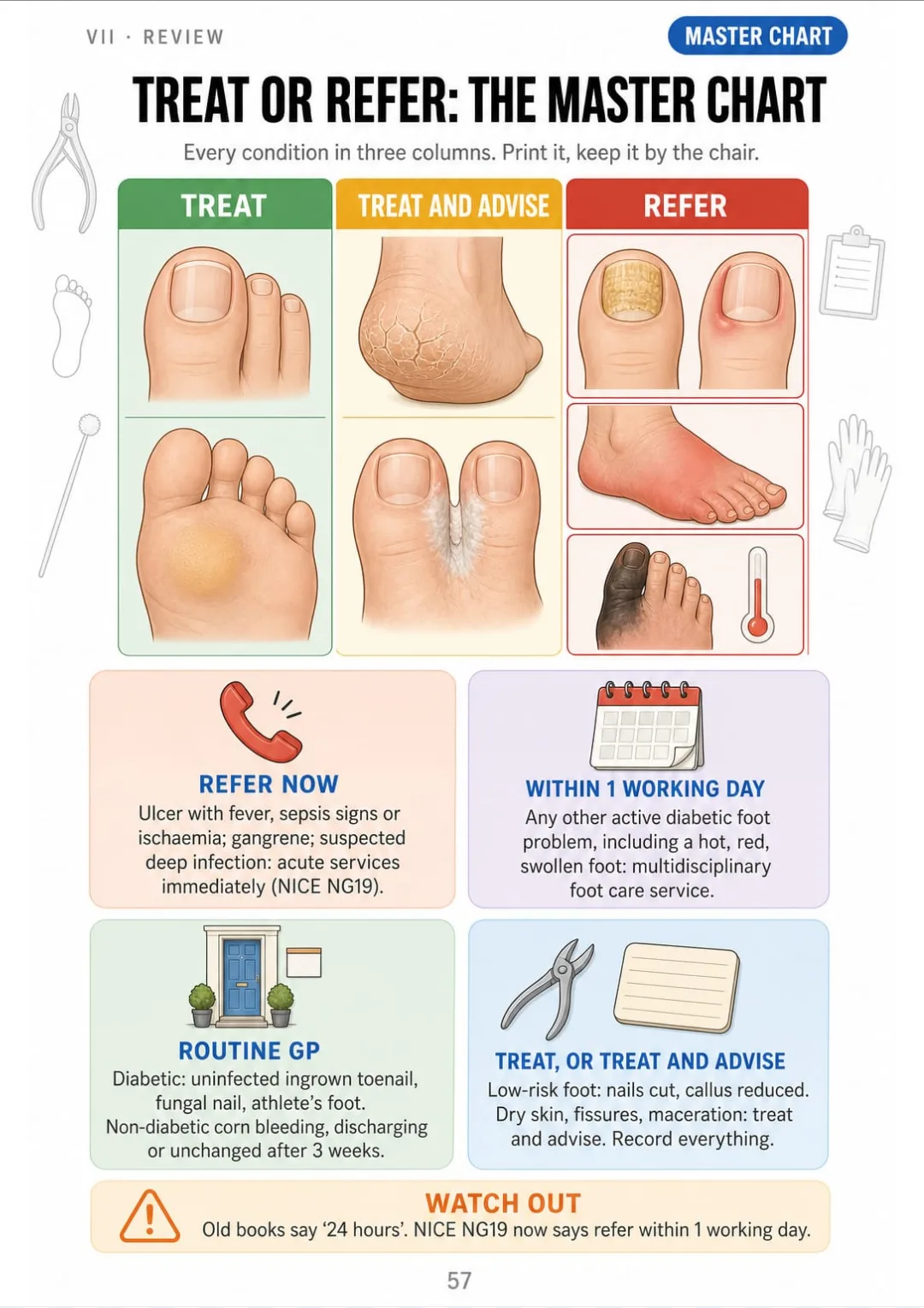
Treat, treat and advise, refer: routine, within 1 working day or now (NICE NG19).

Swipe to see more →

These are real pages from the book. The table of contents is the full one: 7 parts and 59 topics.

The Problem Isn't You. It's How It Was Explained to You.

You're at the treatment chair, gloves on the trolley, and your tutor asks: "When do you clean your hands?" You know there are five moments. You can only name two.

The module covers them in three paragraphs: before, after, aseptic task, body fluids, surroundings. Five ideas buried in sentences, with nothing to look at.

WHO 5 moments, drawn around the treatment chair (NIPCM, Chapter 1)

In the book, hand hygiene is one page: the treatment chair drawn from above, with the five moments marked around it, from before you touch the client to after you touch their chair, footrest or trolley.

The same goes for the 10-step treatment, the benchtop autoclave, the straight-across cut, corn or verruca and the 10 g monofilament test: each one has its own page.

You picture the chair, you see the five points, and you clean your hands at the right moments without opening the module again.

COMPARE FOR YOURSELF

The Same Topic, Two Ways to Study It

THIS
  • The manual: line after line of text
  • Pressure points described only in words
  • You reach the assessment still unsure
During the stance phase of gait, body weight is transmitted through the plantar surface of the foot and concentrated over specific bony prominences. The principal areas of loading comprise the posterior plantar aspect of the calcaneus, the heads of the first and fifth metatarsals and the distal plantar surfaces of the digits. Sustained or repetitive loading at these sites, particularly in the presence of reduced plantar fat padding or inappropriate footwear, predisposes to hyperkeratotic lesions and, in the neuropathic foot, to tissue breakdown and ulceration.
FOR THIS
  • The pressure points in one drawing
  • The four sites in one box
  • You see it and you get it
Dorsalis pedis on top, posterior tibial behind the inner ankle: the two foot pulses.
CONTENTS

Take a Look at the 7 Parts and 59 Topics

The foot you're working on, infection control and sterilisation, the treatment in order, nails, skin, the at-risk foot, and review and practice: 63 pages, all illustrated

IThe foot you're working on · pp. 5-12
  1. 26 bones in three zones
  2. The pressure points under the foot
  3. The three arches
  4. Skin layers of the sole
  5. Anatomy of the nail
  6. Nerves and sensation
  7. Blood supply and the two pulses
  8. Words you'll read in the notes
IIInfection control and sterilisation · pp. 13-20
  1. Hand hygiene: when
  2. Hand hygiene: how
  3. Your PPE, in order
  4. Clean, disinfect, sterilise: not the same
  5. The instrument cycle
  6. The benchtop autoclave
  7. Single-use means single use
  8. Sharps and clinical waste
IIIThe treatment in order · pp. 21-29
  1. The 10 steps, always the same
  2. Step 1-2: medical history
  3. Step 3: valid consent
  4. Step 4: setting up the treatment area
  5. Step 5: inspection, top to toe
  6. Step 6: quick assessment
  7. Step 7-8: nails, then skin
  8. Step 9: advice to take home
  9. Step 10: the client record
IVNails · pp. 30-38
  1. Your nail instruments
  2. The straight-across cut
  3. Small bites, not one cut
  4. Thick nails (onychauxis)
  5. Ram's horn nail (onychogryphosis)
  6. Ingrown toenail
  7. Fungal nail (onychomycosis)
  8. Bruised or dark nails
  9. Treat or refer: nails
VSkin: hard skin, corns and verrucas · pp. 39-46
  1. Callus: why it forms
  2. Removing callus safely
  3. Corn: callus with a core
  4. Soft corns between the toes
  5. Corn or verruca?
  6. Verrucas: what you do
  7. Dry skin and heel fissures
  8. Athlete's foot and maceration
VIThe at-risk foot · pp. 47-56
  1. Why the diabetic foot is different
  2. The annual foot check
  3. The 10 g monofilament test
  4. The four risk levels
  5. Who sees the client at each level
  6. Red flag: ulcer or broken skin
  7. Red flag: the hot, swollen foot
  8. Red flag: signs of infection
  9. Red flag: poor circulation
  10. Working on an at-risk foot
VIIReview and practice · pp. 57-63
  1. Treat or refer: the master chart
  2. Your scope of practice
  3. The full treatment in one drawing
  4. Checklist before the client arrives
  5. Mistakes with nails
  6. Mistakes with skin and the at-risk foot
  7. Practical assessment: what to say out loud

One Page, One Topic, All Clear

Think of it this way:

Tomorrow your first client has diabetes. Before you pick up the nippers you'll check sensation, and you want the monofilament sites clear in your head, not half-remembered from a module.

You open the book at the 10 g monofilament test and the sole is drawn with every test site marked, with what to write in the record next to it.

Nippers, files, Black's file, probe and burr: one row, one job each.

The same with the benchtop autoclave, the straight-across cut, soft corns between the toes, the hot, swollen foot and your scope of practice: each one on its own page.

Foot Care Illustrated is 7 parts and 59 topics, all drawn, with the treat-or-refer master chart and the practical assessment at the end.

What you see drawn, you don't have to memorize.

What's Inside Foot Care Illustrated:

Ipp. 5-12

The foot you're working on

The 26 bones in three zones, the pressure points, the three arches, the skin of the sole, the nail, nerves, the two pulses and the words you'll read in the notes.

IIpp. 13-20

Infection control and sterilisation

Hand hygiene (when and how), your PPE in order, clean vs disinfect vs sterilise, the instrument cycle, the benchtop autoclave, single-use items, sharps and clinical waste.

IIIpp. 21-29

The treatment in order

The 10 steps, always the same: hand hygiene, medical history, valid consent, set-up, inspection, quick assessment, nails, skin, advice and the client record.

IVpp. 30-38

Nails

Your nail instruments, the straight-across cut, small bites, thick and ram's horn nails, ingrown, fungal and bruised nails, and the treat-or-refer box for nails.

Vpp. 39-46

Skin: hard skin, corns and verrucas

Why callus forms and how to reduce it safely, corns and soft corns, corn or verruca, what you do with verrucas, heel fissures, athlete's foot and maceration.

VIpp. 47-56

The at-risk foot

Why the diabetic foot is different, the annual foot check, the 10 g monofilament, the four risk levels, who sees the client, the four red flags and working on an at-risk foot.

VIIpp. 57-63

Review and practice

The treat-or-refer master chart, your scope of practice, the full treatment in one drawing, the pre-client checklist, the most frequent mistakes and what to say out loud at your assessment.

At the end of the book: The treat-or-refer master chart, the full treatment in one drawing and a checklist for before the client arrives.

Plus: 2 Free Books

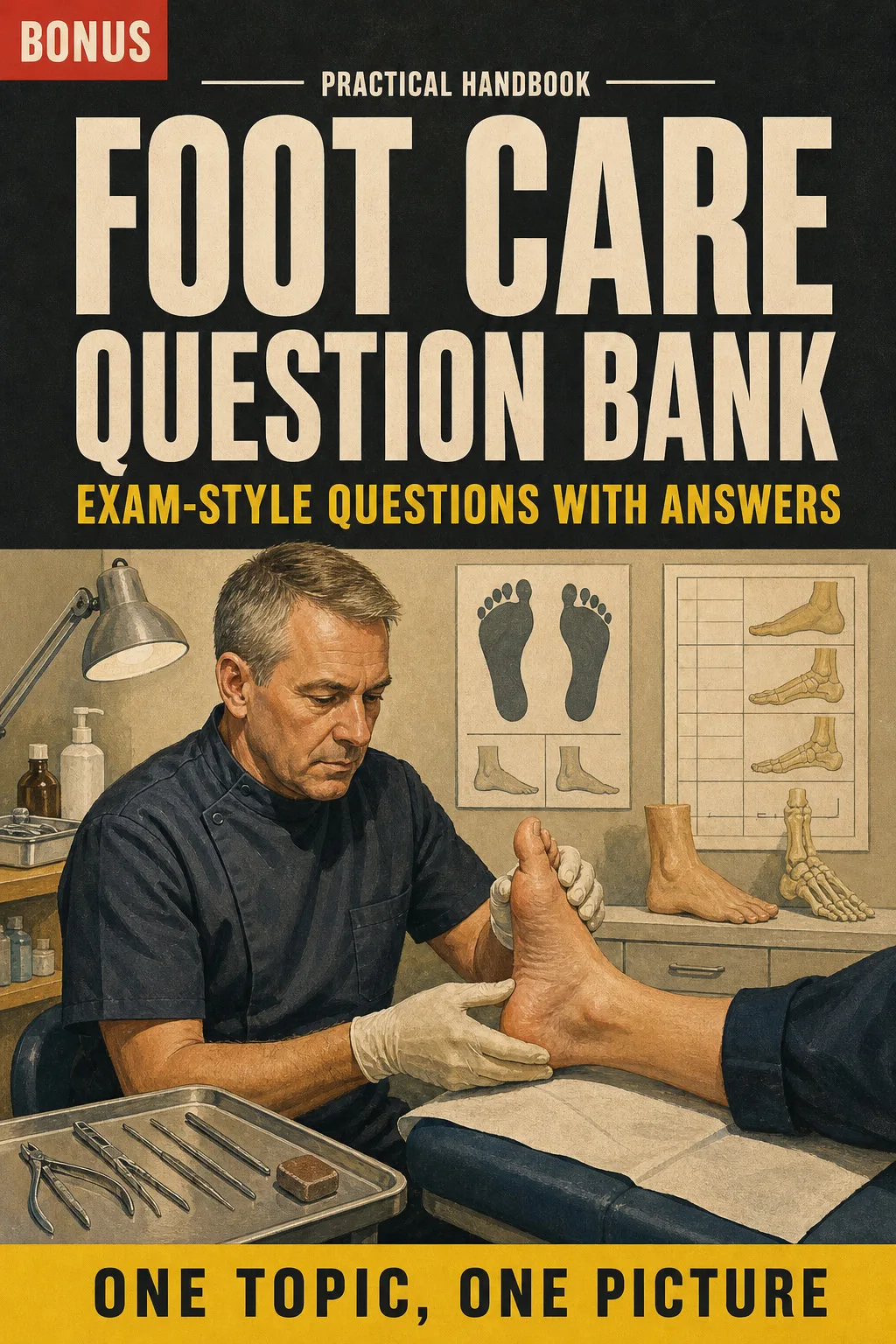
Foot Care Question Bank: exam-style questions with answers

BONUS 1: «Foot Care Question Bank: exam-style questions with answers»

Value on its own: US$ 17.90

Test yourself before your assessment with exam-style questions on anatomy, sterilisation, nail care and the at-risk foot, each with the answer explained in one line.

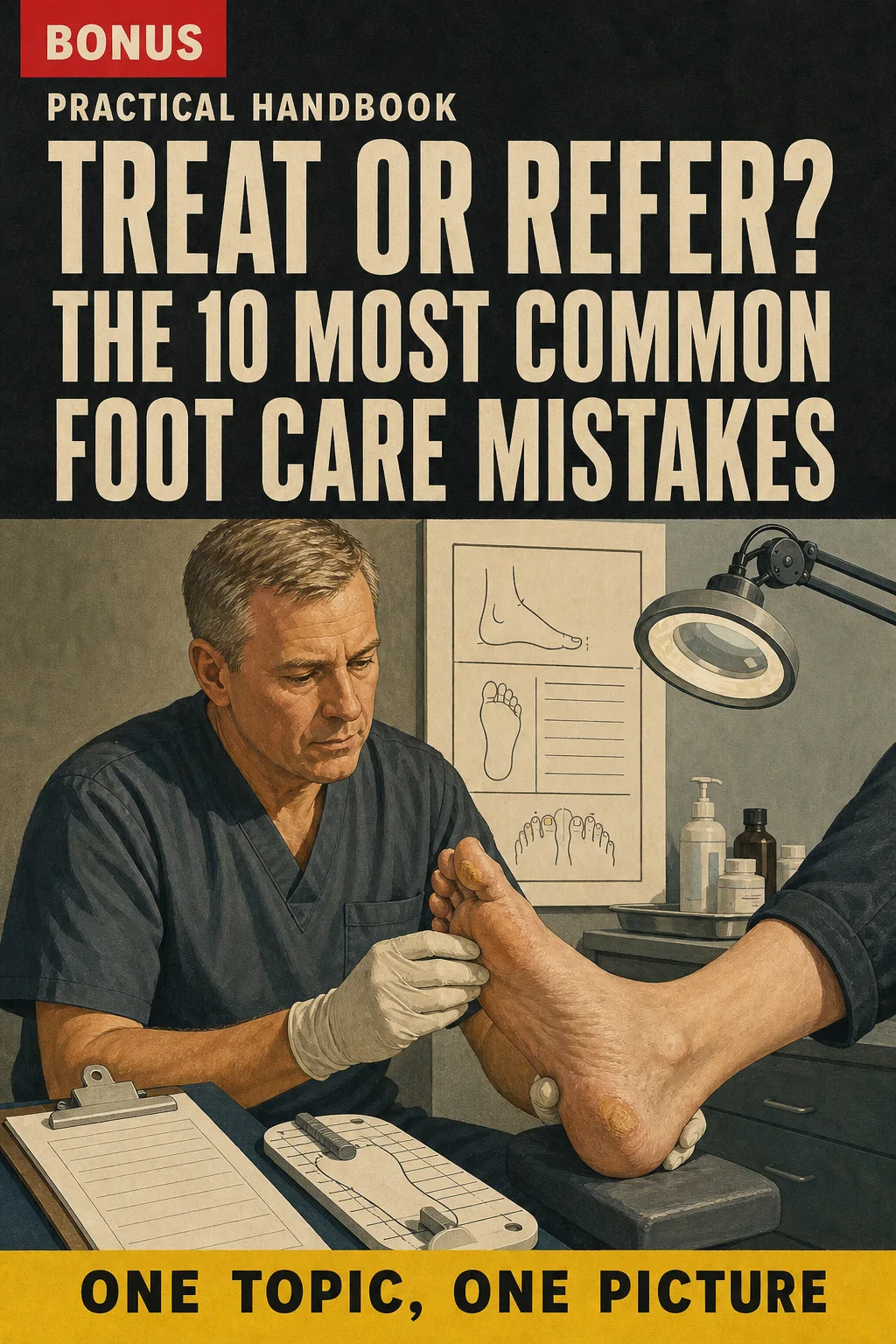
Treat or Refer? The 10 most common foot care mistakes

BONUS 2: «Treat or Refer? The 10 most common foot care mistakes»

Value on its own: US$ 14.90

See the most frequent mistakes drawn before and after, from rounded nail corners to cutting near broken skin, so you spot them on the day, not afterwards.

Foot Care Illustrated with 2 Free Books

  • Foot Care Illustrated: 63 illustrated pagesUS$ 63
  • BONUS 1: Foot Care Question Bank: exam-style questions with answersUS$ 17.90
  • BONUS 2: Treat or Refer? The 10 most common foot care mistakesUS$ 14.90
  • High-resolution PDF to printIncluded
Total value US$ 95.80
YOUR PRICE:
US$ 27
You save US$ 68.80
YES, I WANT FOOT CARE ILLUSTRATED FOR US$ 27

📄 This is a digital PDF book sent to your email: nothing is printed or shipped.

Secure purchaseEncrypted payment30-day guarantee

PDF by email: We email you Foot Care Illustrated as a PDF, together with the two free books. It's a single payment: no installments, no extra charges.

Who This Book Is For

You're on a foot health course

You're on a foot health course

Each module topic becomes one drawn page, so you revise anatomy, sterilisation and nail care in the same order every night.

Your practical assessment is close

Your practical assessment is close

The 10 steps, the red flags and what to say out loud are on a few pages you can go over the evening before.

You already work in a care home or salon

You already work in a care home or salon

You check feet and trim nails knowing where your job stops, with a treat-or-refer box on every condition page.

Everything You Get Today

US$ 95.80US$ 27
YES, I WANT FOOT CARE ILLUSTRATED FOR US$ 27

📄 This is a digital PDF book sent to your email: nothing is printed or shipped.

30DAYS
GUARANTEE

30-Day Guarantee

Try Foot Care Illustrated for 30 days, bonus books included.

We refund everything if the file won't open, if the book isn't what you see here, if you were charged twice or if the email doesn't arrive. Just email us.

You pay once. No subscriptions.

Frequently Asked Questions

Is it for me if I'm on a foot health course or already trim nails at work?

Yes. It's written for UK foot health and foot care students, care workers and healthcare assistants, and nail technicians adding foot care. If you already work, it gives you the order and the treat-or-refer line on every page.

Where does the content come from?

It's written in line with current UK guidance: NICE NG19 on diabetic foot problems, the NHS England National Infection Prevention and Control Manual, HTM 07-01 on healthcare waste and NHS information on foot conditions.

Is it official material?

No. It's independent study material. It isn't produced or endorsed by the NHS, NICE or any course provider, and it doesn't come with a certificate or CPD hours: it's for studying and revising alongside your course.

Does it replace my course or practical training?

No. It's for study and revision. It doesn't replace your course, supervised practice or advice from a GP or podiatrist, and it doesn't qualify you to practise or to use a protected title such as podiatrist or chiropodist.

Are the practice questions the ones in the exam?

No. The questions are written for this book to help you test yourself. They are not official questions from any exam or assessment.

When and how does it arrive?

As a PDF by email, to the address you enter at checkout. The 2 free books come as PDFs too.

Do I have to pay every month?

No. It's a one-off payment. There's no subscription.

Can I have it on paper?

Yes. The PDF is made to print, at home or at a print shop, so you can keep the pages you use most by the treatment chair.

How does the refund work?

You have 30 days. We refund everything if the file won't open, if the book isn't what you see on this page, if you were charged twice or if the email doesn't arrive: just email us.

Before You Close This Page

No more rereading modules that don't stick.

You see the monofilament sites drawn, and that's it.

You walk into your assessment knowing where everything is.

Drawings make studying faster.

The book is right below.

One-time payment: US$ 27 · Guarantee: 30 days · PDF by email

YES, I WANT FOOT CARE ILLUSTRATED FOR US$ 27

📄 This is a digital PDF book sent to your email: nothing is printed or shipped.